
Dear Reader,
Thirty dollars.
That is how much oil gave back in 30 days.
On June 3, Brent crude traded at $101 a barrel. That was the war premium. The Strait of Hormuz had been effectively shut since February, when U.S. and Israeli strikes on Iran cut off roughly 20% of global oil supply. The market panicked. Prices spiked. Energy headlines screamed about $150 oil by August.
Today, Brent sits at $73. WTI is under $69. The war premium is gone.
Not because the wells refilled. Not because demand died. Because Iran's supreme leader, Ayatollah Khamenei, was confirmed dead this week. Within 48 hours, U.S. and Iranian diplomats were sitting in Doha talking about reopening the strait.
One man dies. One meeting happens. Thirty dollars evaporates.
My rich dad taught me a long time ago: if a price can swing $30 on one man's death, it is not a price. It is a bet on a heartbeat. Bets on heartbeats eventually lose.
The smart play is not the war premium. The smart play is the asset that collects the toll regardless of what happens in Doha. That is exactly what I show you today.
INSIDE TODAY'S ISSUE
• THE BARREL: WTI hit $69. Brent hit $73. That is a 32% crash from the June peak. OPEC announced a July production hike of 188,000 barrels a day. Analysts call it largely fiction. Why the paper quota means nothing when the physical route is still contested.
• THE GRID: Trump's DOE met its July 4 nuclear deadline. Three advanced reactors reached criticality this week. One can black-start an entire data center during a grid outage. The market has not priced this yet.
• THE POLICY DESK: Khamenei is dead. June jobs came in at 57,000 versus a 110,000 estimate. Two numbers that, taken together, tell me exactly where rates go from here and what that means for hard asset prices.
• THE PLAY: America exports 17 billion cubic feet of natural gas every single day. Five new export terminals are coming online in 2026 and 2027. When Hormuz normalizes, this machine does not slow down. It accelerates.
THE BARREL
WTI crude: $68.98. Brent: $73.43. That is where the market stands this morning.
Three weeks ago oil was over $100. The $30 spread between then and now tells the whole story: the market built in a fear premium when Hormuz closed, and now it is taking that premium back. Qatar confirmed this week that U.S.-Iran talks in Doha have made "meaningful progress." But Iran also warned tankers to use approved shipping routes or face a "forceful response." The diplomats are talking. The tankers are still nervous.
OPEC+ voted on a July production target increase of 188,000 barrels a day. It sounds like supply relief. Here is the catch: Saudi Arabia, Iraq, and Kuwait are three of the seven nations in that agreement, and all three export through Hormuz. A quota hike on paper means nothing when the physical route is still contested. Analysts call it largely fictional. They are right.
Natural gas tells a cleaner story. August futures: $3.18 per MMBtu. The EIA projects $4.30 by year end. The driver is not weather. It is five new U.S. LNG export terminals coming online in 2026 and 2027. Every molecule that leaves this country by tanker tightens domestic supply. This price has one direction from here.
The real story is not the price of oil or gas. It is the infrastructure that moves it. The sector that wins whether Hormuz opens or stays closed. I will show you exactly what that looks like after this.
SPONSORED: OXFORD CLUB
Elon Musk: "The Only Thing That Can Solve It"
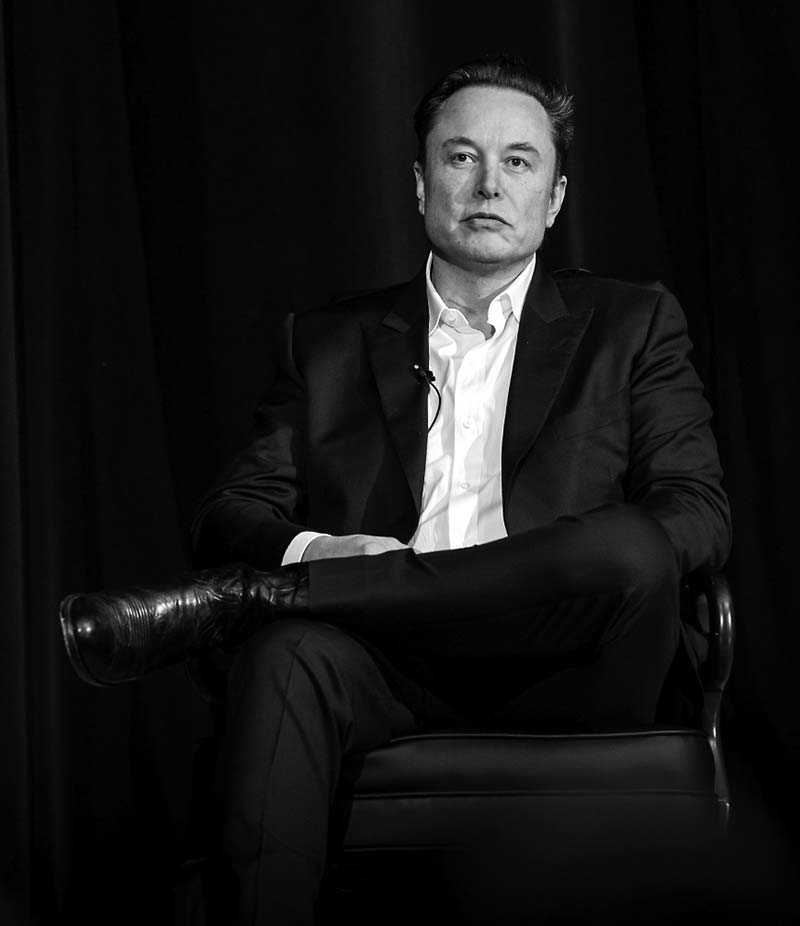 |
In a bombshell interview, Elon Musk declared that AI and robotics are "the only thing" that can solve America's $38 trillion debt crisis. He predicts it will happen within three years. One Wall Street veteran has identified a single fund at the center of this AI buildout - and you can get in for less than $20. See what Musk didn't tell you >>
THE GRID
On July 1, the U.S. Department of Energy announced something every energy investor should know.
Three advanced nuclear reactors reached criticality this week. That is the moment a reactor first sustains a controlled nuclear chain reaction. One of the three is Deployable Energy's "Unity" reactor, which achieved zero-power fueled criticality at Idaho National Laboratory on July 1. This fulfilled President Trump's executive order requiring three reactors to hit that milestone by July 4.
The mainstream story calls this a symbolic political win. I disagree.
NuScale's SMR technology is the only reactor certified by the NRC to operate behind the meter. That means it can black-start and power an entire facility during a grid outage. No other energy source can make that claim. Not solar. Not wind. Not diesel backup.
Here is the number that puts it in focus: 75% of all power demand growth through 2030 will come from data centers. The IEA says grid investment must rise 50% in the same period, from $400 billion a year to $600 billion. The grid we have was built in the 1960s and 1970s. It was designed for a different world.
Three reactors at criticality in one week is not a symbolic milestone. It is the opening move in the biggest grid buildout since rural electrification.
THE POLICY DESK
Two numbers came out this week. Hold both in your head at the same time.
First: the June jobs report. The U.S. economy added 57,000 jobs last month. The consensus estimate was 110,000. Prior months were revised down by a combined 74,000. Labor force participation fell to 61.5%, its lowest level in five years. Mainstream headline: "Soft data reduces rate hike risk. Bullish for stocks." My read: the consumer is more stretched than the Fed is letting on.
Second: Khamenei. Iran's supreme leader of 35 years was confirmed dead this week. Tehran is in a week of national mourning. Iran warned the U.S. and Israel against any strikes during the funeral. U.S.-Iran talks in Doha continue on Hormuz access and a nuclear framework.
What does a jobs miss have to do with Iran? Everything, if you are the Fed.
A weak labor market gives the Fed room to cut rates. Rate cuts lower the dollar. A lower dollar lifts hard asset prices. Oil, gas, gold. If Hormuz resolves AND rates fall, energy infrastructure does not pull back. It accelerates.
On the domestic front: the Trump DOE projects U.S. households save $11 billion on gasoline in 2026 versus 2022. Bureau of Land Management drilling permits are up 55% versus the prior administration's same period. The domestic machine is running at full speed.
THE PLAY
Let me tell you who does not care whether Hormuz opens or stays closed.
The American LNG exporter.
The United States exports 17 billion cubic feet of natural gas every single day. We are the world's largest LNG exporter. We built that position from zero in nine years.
Five new export terminals come online in 2026 and 2027: Corpus Christi Stage 3, Golden Pass LNG, and Plaquemines LNG among them. The EIA forecasts exports hit 17 Bcf per day this year, then grow another 9% in 2027.
Run both scenarios. Hormuz stays closed: global LNG supply stays tight, American gas sells at a premium to Asia and Europe. Hormuz opens: oil normalizes, economic activity picks up, power demand climbs with it. Either way, the infrastructure that moves American gas to market collects the toll.
This is what my rich dad called the B-quadrant. You do not work for the wage. You own the pipeline. The terminal. The royalty stream. The worker pumps the oil. The B-quadrant investor owns the pipe it flows through.
Look at midstream operators. Look at LNG terminal developers. Look at royalty companies with exposure to the Permian and Haynesville basins. The war premium in oil fades. The structural demand for American gas does not.
Stay empowered.
P.S. The toll-collector thesis above points to specific midstream and LNG names. Our premium research covers the companies with the lowest breakeven costs, the longest contracted revenue streams, and the balance sheets built to survive another Hormuz shock. To see which infrastructure plays fit that profile, click here.